
How to Mill Your Own Flour at Home
Milling your own grain is a great way to use nutrient dense, whole food ingredients in your everyday recipes. It is easier than most people think and gives a rich, fresh flavor to your recipes. This is an easy way to mill your own flour at home with a few simple steps.
This post may contain affiliate links. Please read our disclosure policy.
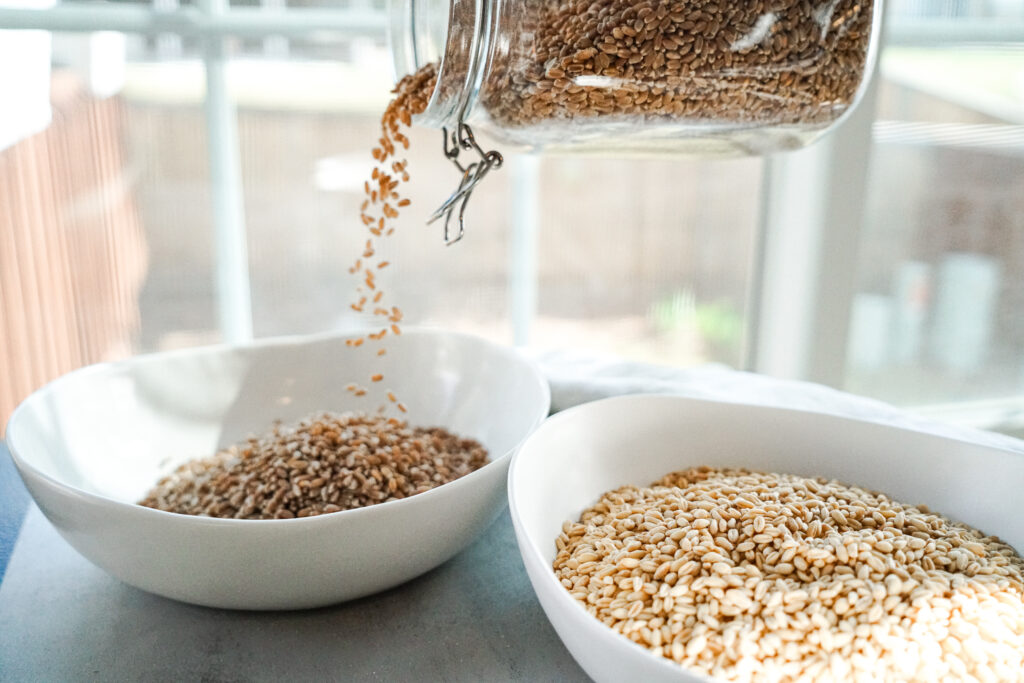
What is Freshly Milled Flour?
Freshly milled flour is wheat berries, or an alternative grain or gluten-free variety, that is milled into flour right before being used in a recipe. Freshly milled flour is in its whole food form and packed with fiber, minerals, nutrients, and omega 3 fatty acids. Store-bought flour, unlike freshly milled flour, is stripped of its nutrients to make it more shelf stable and help it keep from going rancid.
Why Mill Your Own Flour?
Once I learned about the nutritional differences of freshly milled flour and store bought flour, I bought my own mill. There are many benefits of freshly milled flour including nutrients, cost, food security, and flavor.
Nutritional Benefits to Milling Your Own Flour
Flour doesn’t have to be an empty calorie. Freshly milled whole grains contain all of the parts of the wheat berry (the bran, germ, and endosperm). The nutrients in a wheat berry include fiber, protein, trace amounts of vitamins, omega-3 fatty acids, minerals, and antioxidants. With milling at home you’re able to mill multiple kinds of grain depending on your preferences and nutritional goals. Store-bought all purpose flour only contains the endosperm part of the wheat berry which has little to no nutrients. This is exacerbated after sitting for so long on the shelf.
Cost Benefit of Milling Your Own Flour
Buying wheat berries is considerably less expensive than buying all purpose flour from the store. I save $63 per 50lbs of flour that I use! Purchasing the grain mill is a more expensive up front cost. With the grain mill I bought ($342 at the time) and the wheat berries I’ve purchased I will break even on the grain mill after 268lbs of grain. That sounds significant, but we reached that amount at 15 months with my family of 3 (which was quicker than expected). This was accomplished by making our own bread, baked goods, pizza dough, rolls, etc. from scratch. Investing in the grain mill and bulk grain was worth it based on the nutrients added to our daily flour, and the long term cost savings are an added benefit.
Food Security Benefits of Storing Wheat Berries Instead of Store-Bought Flour
Freshly milled flour uses the wheat berries, or grain alternatives, which are in their whole food source. Wheat berries are extremely stable and have a shelf life of 20+ years if stored properly. We love the fact that we can keep multiple kinds of grain at larger volumes since it won’t go bad in its whole grain form. We are also able to mill only what we need for that recipe. Freshly milled flour starts to lose its nutritional value quickly making it more worth it to only mill what you are going to use.
Freshly Milled Flour has Better Flavor
The flavor of whole grain flour is different than all purpose flour. It is much more complex with a nutty undertone. My whole family loves the more robust and rich flavor, but the doughs are more dense and not as light & airy as store-bought all purpose flour. If you’re looking to use whole foods in your kitchen and wanting to use healthier ingredients in your cooking, then I think the switch is well worth it!
The Three Parts of a Wheat Berry
A kernel of wheat has three parts, the Bran, the Endosperm, and the Germ.
- The bran contains insoluble fiber, incomplete protein, some trace amounts of B vitamins, and Iron. This is the outer layer of the wheat berry.
- The germ contains protein, vitamin E, B vitamins, carotenes, antioxidants, and omega-3 fatty acids. This is the nutrient dense core of the wheat berry.
- The Endosperm contains carbohydrates, incomplete protein, and trace amounts of vitamins and minerals. This is what store-bought flour is primarily made of, meaning you will lose out on the nutritional value of the other two components.
The History of Grain Milling
The flour market was changed in 1870 when mills equipped with rollers were invented. This change introduced a shelf-stable version of flour that we consume today. This version of flour only contained the Endosperm since the Bran & Germ begin to oxidize as soon as they contacted air. The oxidation caused them to go bad within 6 months of milling.
The nutritional breakdown of wheat was not understood until the mid-1900s when millers realized they were stripping away a major source of vitamin B. This is when flour started to be enriched with vitamins. Instead of going back to freshly milled flour, a “band-aid” was put on the situation and synthetic vitamins were added to the store-bought flour instead.
Is Store-Bought Whole Wheat Flour a Good Option?
If you’re thinking that you can buy “whole wheat flour” at the grocery store and call it good, unfortunately it does not work that way. Store-bought whole wheat flour is often made by refining white flour and then adding the bran back in. You would not get the entirety of the wheat berry since you’d miss out on the germ since that is removed to extend the flours shelf life. Store-bought whole wheat flour contains more fiber than white all-purpose flour and marginally more nutrients, but it does not compare to the nutrient profile of freshly milled wheat berries.
Grain Mill Options
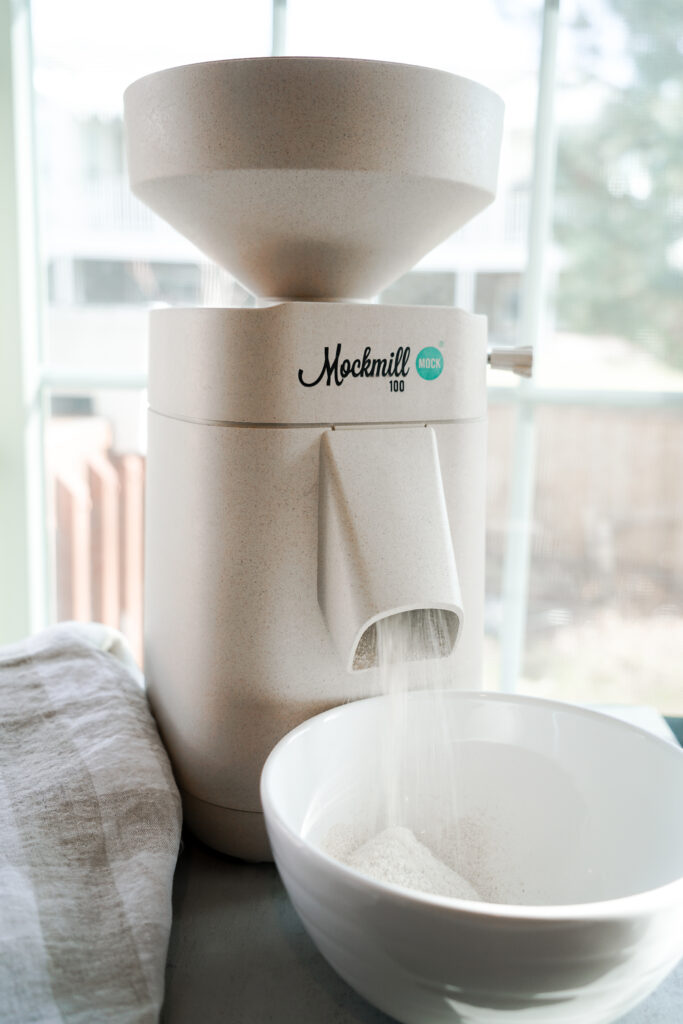
There are many great grain mill options out there and the one I bought was the Mockmill 100 from Breadtopia. (Note – I am not sponsored by this company. I am recommending this based on personal experience only. There are many options that you should research before purchasing).
There are electric mill options like the Mockmill, Nutrimill, and mill attachments for kitchen mixers. Something to consider when you are looking into grain mills is that the grain is not heated too much. Heat can cause the nutrients to break down. The Mockmill’s ceramic grinding stones do not heat the flour much. I also love that I can quickly mill what I need for a recipe into a very fine flour that works well for breads and pastries.
There are also hand mills which will get you a workout, but are another way to mill your own grain. Or you could use equipment you might already have a like a coffee grinder, food processor or high speed blender. These options are still effective and can be more cost beneficial. Just be careful to not add heat as previously mentioned.
I’ve found from my research that the electric mill (either Mockmill or Nutrimill) offers the easiest way to mill at home while retaining the most nutrients. Mockmill took up the least amount of space on my kitchen counter, so I narrowed it down further to that! They also have options that are more visually appealing, but I went with their lower price and lower speed option, and I have loved it.
How to Use the Mockmill
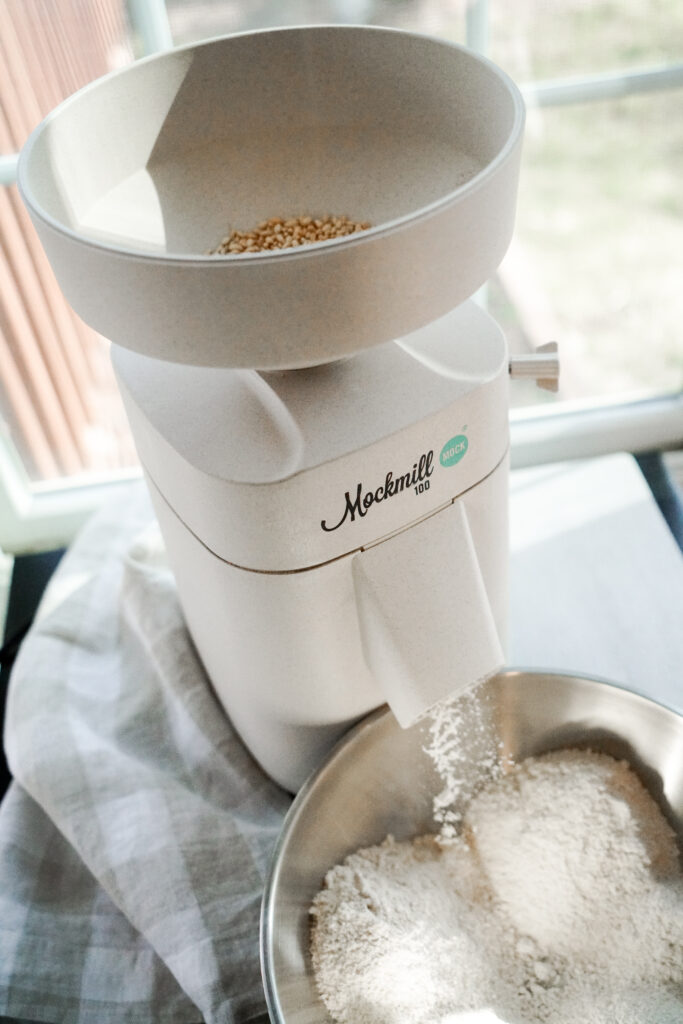
Milling using the Mockmill is easy.
Adjust the grind to your desired coarseness (for me, I keep it at the finest, option 1, unless I’m making cornbread or cream of wheat then I have it more coarse).
Place a bowl under the dispenser.
Turn on the mill.
Add your grain/wheat berries to the hopper.
Tips & Tricks:
I move the bowl around every minute or so to keep the grain from flying everywhere. I have also found that a glass or stainless steel bowl works better than a plastic bowl, since static charge with a plastic bowl causes the grain to fly around and make a mess.
If you are wanting your grain to be finer than it came out, you can add it back to the hopper to grind it again.
If you’re wanting a lighter flour with the added nutritional benefit of freshly milled flour, then you can sift out the bran portion of the wheat berry using a 60/40 sifter. This removes the benefit of the bran (fiber, protein, B vitamins, iron, etc), but it does allow for a lighter bread or baked good.
What Type of Grain is Best?
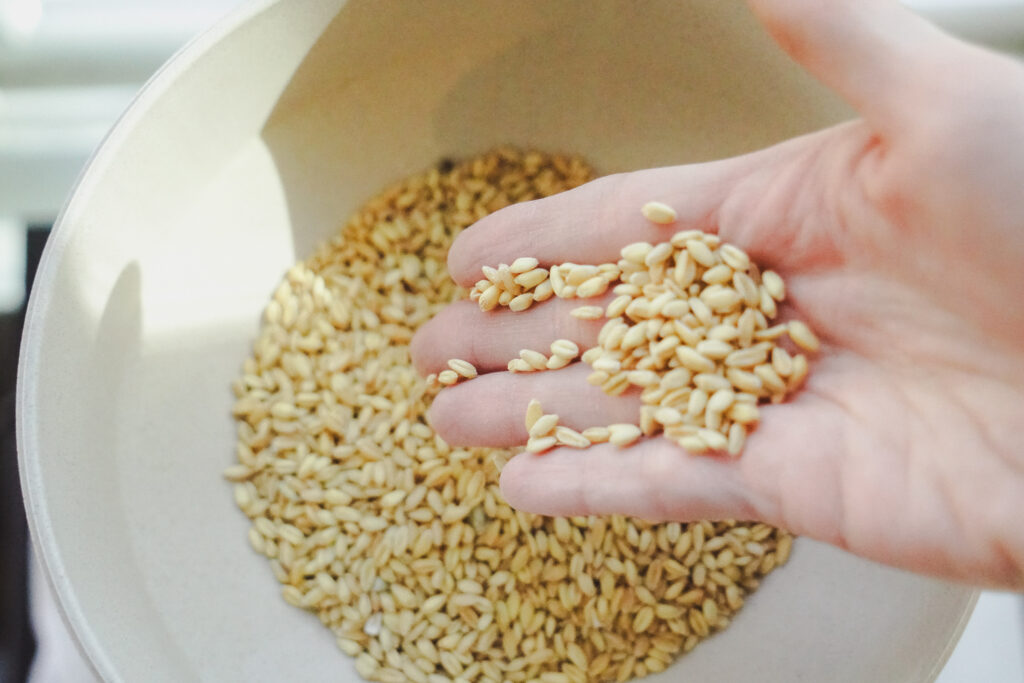
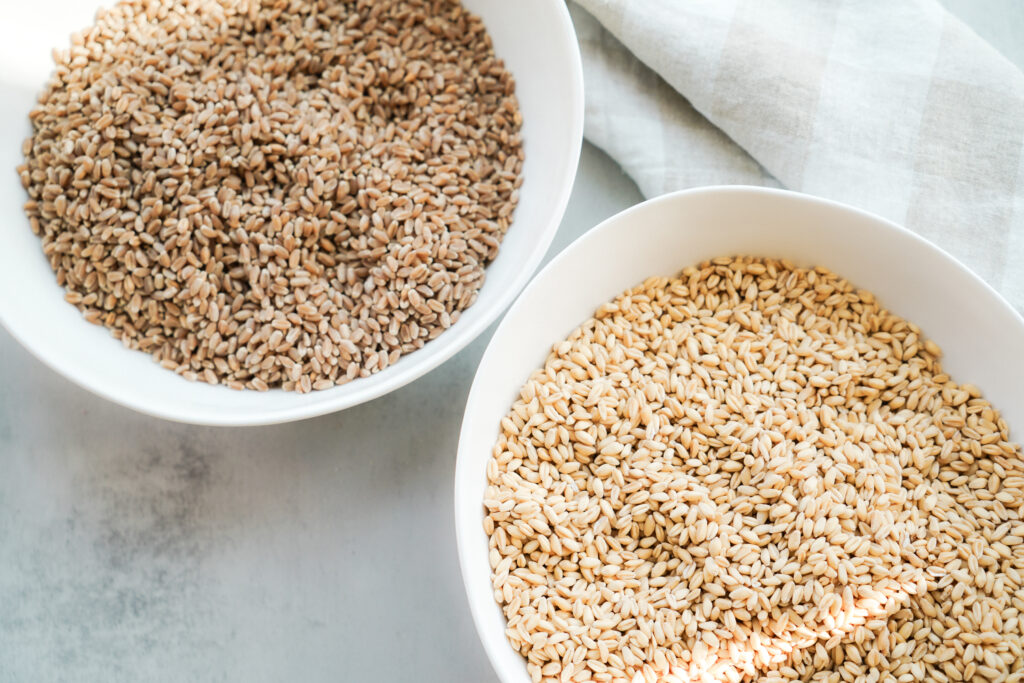
Our favorites are hard red wheat berries and soft white wheat berries, but you can also mill a wide variety of grain and gluten-free varieties based on your taste preferences and more!
Wheat Grain Varieties:
- Hard Red Wheat: Great for bread flour due to its higher protein content. My first pick for grain!
- Hard White Wheat: Great for bread flour due to its higher protein content.
- Soft White Wheat: Perfect for pastries and cakes due to its lower protein content. My second pick for grain to have on hand.
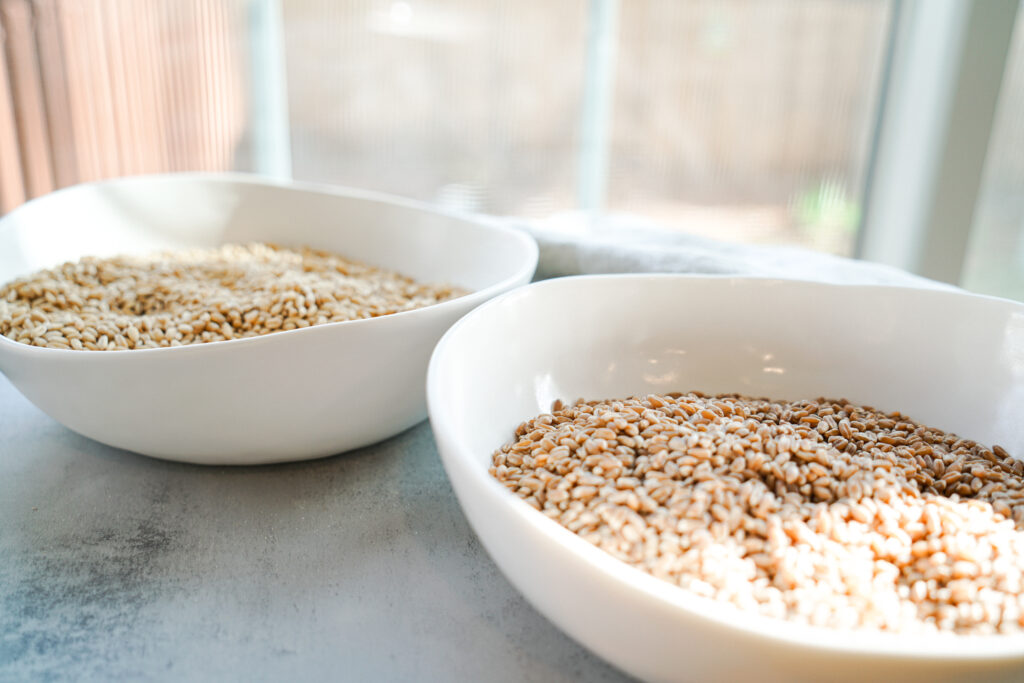
Ancient Grains and Other Grain Varieties:
- Hulled Barley: Neutral flavor and high beta-glucan content. Excellent to add about 1/3 of the flour needed to a pastry.
- Einkorn: A nutty flavor and naturally lower gluten content.
- Kamut: A buttery flavor and high protein ancient grain. Great for pastas.
- Spelt: A sweet and nutty ancient grain. Great for pastries.
- Rye Berries: Excellent for rye bread.
- Gluten free options: Rice, quinoa, millet, corn, amaranth
Where to Buy Whole Grains
Buy whole grains from Azure Standard, Amish stores, or local health food stores. We have an Azure Standard co-op about 15min from our house and they drop once per month. We plan ahead with what grains we will need and buy about 6 months worth of grain for our family.
How to Store Whole Grains
Storing your whole grains in 5 gallon buckets with twist off lids is an easy and safe storage method. I keep the buckets in my basement, but anywhere in your house that has a reasonable to cool temperature is ok. Then I keep some smaller jars in my pantry to have a smaller amount of the grain closer to where I’m cooking. I do not recommend keeping the grain in the bag it came in since bugs can easily get in and spread, which will ruin multiple bags of grain.
When to Mill Your Own Flour
Milling your grain as close to baking or fermenting will yield the best nutritional value in your recipes. As soon as the wheat berry is broken, the freshly milled flour starts to oxidize.
How to Store Your Flour
If you mill more flour than you plan on using know that freshly milled flour only stays fresh for a few days at room temperature. Freshly milled flour can be put in an airtight bag or Tupperware and into the refrigerator for up to a week or into the freezer for up to 6 months.
How to Convert Recipes for Using Your Freshly Milled Flour
One cup of wheat berries generally yields about 1.5 cups of flour. The most accurate way to measure is to use a kitchen scale. One cup of flour is approximately 120 grams. If you measure 120g of wheat berries and mill them then you will have 120g of flour. If you’re having trouble deciding if you need to add more water or flour to a recipe to help it come together, then cover your bowl after mixing everything together and let it sit for about ten minutes. The freshly milled flour takes longer to hydrate, so this added time can make it easier to work with your dough.
Conclusion
Milling your own flour is a great way to add more nutrient dense foods to your everyday recipes. By choosing to mill your own flour at home, you’ll enjoy healthier and more flavorful breads and baked goods while saving money at the same time.
Freshly Milled Flour Recipes (Coming Soon!)
Refined Sugar Free Chocolate Chip Cookies
Pizza Dough
Sourdough Bread
No Bake Peanut Butter Balls

